
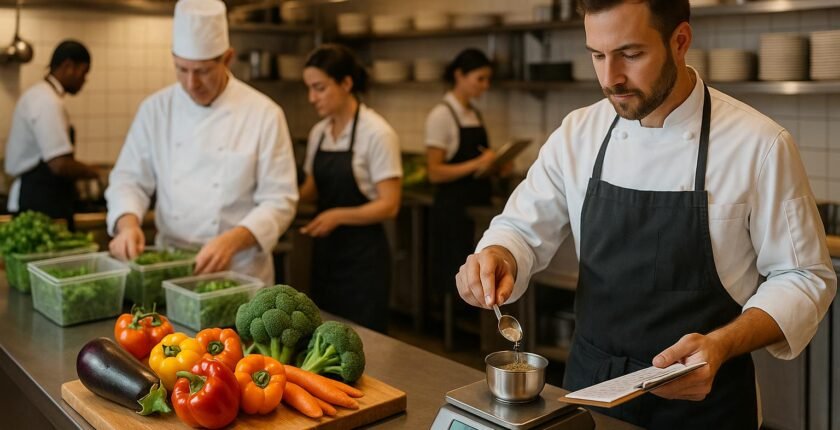
5 ways restaurants can reduce COGS without sacrificing quality
Reducing your restaurant’s Cost of Goods Sold (COGS) doesn’t mean compromising on quality. By focusing on smarter operations, you can control costs while keeping customers happy. Here are five actionable strategies:
- Negotiate with suppliers: Build strong relationships, consolidate orders, and explore bulk discounts or group purchasing organizations (GPOs) for better pricing. Use procurement software to track trends and contracts.
- Leverage inventory tools: Modern inventory software minimizes waste and tracks stock in real time. Combine it with regular audits and FIFO (First In, First Out) methods to avoid spoilage.
- Refine recipes and portions: Standardize recipes, control portions with tools like scales, and adjust menu pricing based on ingredient costs to avoid profit leaks.
- Use seasonal ingredients: Design your menu around in-season produce to save money and reduce waste. Seasonal items can also create buzz with limited-time offers (LTOs).
- Train your team: Educate staff on cost-saving practices like food rotation and portion control. Monitor key metrics like weekly COGS percentages to stay on track.
Small changes, like adjusting portions or negotiating better supplier terms, can lead to significant savings. When combined, these strategies create a cost-conscious system without compromising the dining experience.
CONTROLLING Restaurant Costs Is Simple If You Focus on This ONE Thing | Cogs Control
1. Negotiate Better Supplier Terms and Buy in Bulk
Building strong supplier relationships isn’t just about cutting costs – it’s about securing long-term savings and stability.
Start by consolidating your purchases with a trusted vendor. Many vendors operate on a cost-plus model, where they add a fixed markup to their costs for a set period, usually a year. This approach can help lower food costs while providing predictable pricing.
Negotiation isn’t just about the price tag. Regularly communicate with your suppliers to discuss payment terms, delivery schedules, and potential volume discounts. For instance, if you’re consistently ordering a certain number of cases each week, ask about discounts for larger orders. This can be especially effective for non-perishable items where bulk buying makes sense.
Transparency is key when dealing with supplier contracts. Clearly outline details like quantities, quality standards, pricing, and delivery timelines. This ensures you can quickly identify any discrepancies and address unexpected cost changes.
Consistent orders and open communication can even lead to exclusive savings opportunities. For example, suppliers may offer discounted rates on excess stock. These perks often come down to maintaining a reliable and consistent relationship with your vendor.
If your restaurant doesn’t have significant buying power, consider joining a group purchasing organization (GPO). These organizations pool orders from multiple businesses, allowing you to access bulk pricing without needing to meet high minimum order requirements. Keep in mind, though, that this may limit your ability to choose specific vendors.
To stay on top of pricing trends and identify areas for savings, use procurement software. This technology can track supplier data, monitor invoices, and help secure better bulk discounts.
Lastly, don’t overlook non-food service contracts like linens, trash removal, and utilities. Regularly renegotiating these agreements can result in steady cost savings over time.
Negotiating with suppliers isn’t a one-and-done task. It’s an ongoing process that requires transparency, data-driven decisions, and open communication to consistently secure the best deals.
2. Use Technology and Regular Audits to Manage Inventory
Poor inventory management can lead to spoilage, overstocking, and even theft – issues that directly hit your bottom line.
Relying on spreadsheets or handwritten logs for tracking inventory often results in errors and delays in decision-making. Instead, modern inventory management software can simplify the process. These tools automatically track stock levels, alert you when supplies are running low, and even predict future needs based on past sales trends.
By connecting your inventory system to your POS data, you gain real-time visibility into usage patterns. This integration helps you quickly spot discrepancies, waste, or theft, while also providing a foundation for manual checks.
Regular physical audits are essential. For high-value items, consider weekly audits; for everything else, monthly checks should suffice. If you notice any variances during these audits, investigate immediately. Start with high-cost ingredients like premium cuts of meat or specialty items, as even small losses here can significantly affect your cost of goods sold (COGS).
Keep an eye on your inventory turnover ratio – calculated by dividing COGS by the average inventory. This metric provides insight into how efficiently you’re managing your stock.
To avoid overstocking or running out of key ingredients, establish par levels for each item. This triggers reorders automatically when inventory dips below a set threshold. Also, implement the FIFO (First In, First Out) method by labeling items with their received dates and organizing storage to ensure older stock is used first, minimizing spoilage.
For high-value items, use perpetual inventory tracking to maintain real-time counts. Additionally, review variance reports weekly to identify gaps between expected and actual usage.
3. Control Costs Through Recipe Pricing and Portion Sizes
Inconsistent portions and unpriced recipes can quietly drain profits from your restaurant. When your kitchen staff eyeballs measurements or serves varying portion sizes, you lose money with every plate that goes out.
Recipe costing is the process of calculating the exact cost of every ingredient in a dish. Break down each menu item to its smallest unit – whether that’s an ounce, teaspoon, or single piece – and include everything. Once you know the true cost of a dish, you can set menu prices that protect your bottom line. Many successful restaurants aim for food costs between 28% and 35% of the menu price, though this can vary depending on your concept and location.
To ensure consistency, create standardized recipe cards for every dish on your menu. These cards should include precise ingredient quantities, preparation steps, and plating instructions. This way, every shift operates with the same guidelines, reducing waste and maintaining quality. For example, if a line cook uses just 2 extra ounces of chicken per plate and you serve 100 orders daily, you’re losing 12.5 pounds of chicken each week. That’s an extra $50–$75 in unnecessary costs weekly.
Portion control tools are essential to prevent these losses. Invest in accurate measuring tools like scales and portion scoops. For expensive ingredients like proteins, pre-portion items during prep to avoid guesswork during busy service times. This step ensures consistency, even during the rush.
Your menu pricing should reflect real ingredient costs. Reevaluate your numbers quarterly or whenever ingredient prices change significantly. For instance, if your supplier increases beef prices by 15%, your ribeye dish needs immediate attention. You might adjust the menu price, slightly reduce the portion size, or pair it with a lower-cost side to maintain profitability. Thoughtful menu adjustments can keep costs in check without compromising customer satisfaction. Even a small reduction – like cutting 2 ounces from a steak – can lead to significant savings when paired with creative plating.
To stay on top of costs, compare your actual food costs to your theoretical food costs weekly. Theoretical costs are what you expect to spend based on recipes, while actual costs reflect what you’re truly spending. A difference of more than 3–5% is a red flag, signaling issues like portion inconsistencies, recipe deviations, or waste. Address these gaps quickly to keep your margins healthy.
Training your kitchen staff on the importance of portion control is equally critical. When they understand how over-portioning impacts the restaurant’s profitability – and potentially their job security – they’re more likely to stick to the standards. Posting photos of properly plated dishes at each station can also serve as a helpful visual guide.
For items with fluctuating costs, like seasonal produce or seafood, build flexibility into your menu. Use "market price" labels when necessary or create dishes that allow for ingredient swaps without sacrificing appeal. For example, a "chef’s catch of the day" gives you the freedom to use the best-value fish available that week while still offering an attractive option to diners. This kind of adaptability helps you maintain margins while keeping your menu fresh and appealing.
sbb-itb-306cd44
4. Reduce Waste with Seasonal Ingredients
Wasting food doesn’t just harm the environment – it also eats away at your profits. Ingredients that spoil before they’re used are a drain on resources, but incorporating seasonal ingredients into your menu can help tackle this issue while also improving the quality of your dishes.
By designing your menu around what’s in season, you can cut down on spoilage and take advantage of peak flavor. Seasonal produce tends to be more plentiful and less expensive, which helps lower your food costs and overall cost of goods sold (COGS). For instance, summer might showcase zucchini, corn, and berries, while fall brings butternut squash, apples, and hearty root vegetables. This approach not only ensures fresh, flavorful dishes but also keeps your menu exciting and relevant.
Highlighting seasonal and locally sourced ingredients can also resonate with diners. Adding a note like “heirloom tomatoes from Johnson Family Farm” to your menu shows your dedication to quality and local partnerships – without inflating your costs.
Seasonal ingredients also create a perfect opportunity for Limited Time Offers (LTOs). When customers know a dish is only available for a short time, they’re more likely to order it right away. This sense of urgency can boost sales and keep your customers engaged with your offerings.
5. Train Your Team and Track Performance Numbers
No matter how great your systems or supplier deals are, they won’t succeed without a capable, well-trained team. For example, a server who doesn’t know proper food rotation methods could unintentionally cause spoilage, eating into your budget. It’s crucial that your team understands how their daily tasks directly impact food costs and your restaurant’s overall profitability. Training and tracking performance go hand in hand with solid inventory and pricing strategies.
Cross-training is another game-changer. When kitchen staff can handle multiple roles, they’re better equipped to anticipate prep needs and avoid over-preparing ingredients that might otherwise go to waste. This not only reduces errors but keeps operations running smoothly and efficiently.
Tracking key performance metrics is just as important as managing inventory. For instance, monitor your weekly Cost of Goods Sold (COGS) by dividing total food costs by food sales. Keep a close eye on spikes in protein costs or waste, and act quickly when you spot irregularities. The formula for calculating COGS is simple: divide food costs by food sales, then multiply by 100. Remember, your ideal COGS percentage will depend on your restaurant’s concept and menu, so it’s critical to monitor trends over time rather than relying on a single snapshot.
Dive deeper into your numbers by tracking waste logs, inventory turnover rates, and the margins of individual menu items. This helps you pinpoint where costs are leaking, whether it’s a dish with slim margins or excessive waste. Use this data to refine your menu, focusing on high-margin items and cutting back on loss leaders. These efforts, combined with regular inventory audits and recipe costing, will strengthen your overall COGS strategy.
Make it a point to meet weekly with your kitchen management team to review these metrics. This ensures everyone is aligned and actively working as cost-conscious contributors.
To simplify the process, consider using modern restaurant management software. These tools can automatically calculate food costs, flag discrepancies, and generate detailed reports, giving you more time to focus on analyzing the data and making strategic decisions.
Reducing COGS isn’t about cutting corners – it’s about building a system that works and fostering a team culture where everyone values ingredients and takes ownership of reducing waste. With a well-trained staff and clear performance data, cost control naturally becomes part of your restaurant’s DNA.
Conclusion
Cutting down your restaurant’s Cost of Goods Sold (COGS) doesn’t have to come at the expense of the quality that keeps your customers coming back. The strategies discussed here work best as a cohesive system, where each component strengthens the others to create a sustainable approach to managing costs.
Securing supplier discounts and bulk pricing is just the first step. These savings only translate into real profit when paired with smart inventory management. Leveraging technology and conducting regular audits gives you the insights needed to make smarter decisions about what to order, when to order it, and in what quantities.
Recipe costing and portion control, combined with the use of seasonal ingredients, help minimize waste while maintaining consistency. This level of precision creates a solid foundation for smooth operations and sets the stage for effective teamwork.
Team involvement is the glue that holds these strategies together. When everyone – from servers to line cooks to managers – plays their part, cost control becomes second nature. Whether it’s rotating stock properly, sticking to recipes, or keeping a close eye on performance metrics, these everyday actions ensure the strategies are consistently applied.
Audits and performance tracking provide valuable data to refine your approach over time. They help pinpoint the suppliers that offer the best deals, highlight the menu items that deserve more attention, identify areas of waste, and measure how well your team is executing. This feedback loop keeps the system running smoothly and opens the door to continuous improvement.
Managing COGS effectively is essential, and even small changes can have a big impact on your bottom line. By treating these strategies as interconnected parts of a larger system, you can create operational efficiency that protects your profit margins while maintaining the high standards your customers expect.
Start by focusing on the strategies that address your most immediate challenges, then gradually build out a complete, efficient cost-management system. The key is consistency and a committed team that understands the role they play in keeping costs under control. With the right systems in place, you’ll see that quality and profitability can go hand in hand.
FAQs
How can restaurants lower costs with suppliers without compromising quality?
Restaurants can cut expenses with suppliers while still keeping quality intact by focusing on a few smart strategies. First, take the time to understand how suppliers price their products and pinpoint areas where you can negotiate better deals. For items you use often, buying in bulk can save a lot – just make sure you have enough storage space and a plan to avoid spoilage. Setting up regular, predictable delivery schedules can also help lock in better rates and maintain a steady supply.
Another approach is to look into alternative suppliers or products that match your quality standards but come at a lower price. Building strong, long-term relationships with your suppliers can also be a game changer. These partnerships can lead to discounts or special offers, allowing you to save money while still delivering the quality your customers expect.
How can modern inventory tools help restaurants manage stock more effectively?
Modern inventory tools are transforming the way restaurants handle their stock. With accurate, real-time tracking of ingredients and supplies, these tools help cut down on over-ordering, prevent running out of key items, and reduce waste. The result? Lower Cost of Goods Sold (COGS) without sacrificing food quality or customer satisfaction.
By automating the inventory process, restaurants can free up valuable time to focus on other critical operations. Plus, the detailed analytics these tools provide can reveal purchasing patterns, giving managers the insights they need to negotiate better supplier deals and plan more effectively. This not only helps keep costs in check but also boosts profitability – all while maintaining top-notch service and food standards.
Why is it important to train restaurant staff for cost control, and how can it be done effectively?
Training your team plays a key role in keeping costs under control. When your staff understands how their daily actions influence the restaurant’s financial health, they’re better equipped to make decisions that protect the bottom line. Proper training helps reduce waste, ensures portion sizes are consistent, and promotes safe food handling – all of which can lower your cost of goods sold (COGS) without compromising on quality.
To make training effective, focus on practical skills like minimizing waste, accurately tracking inventory, and sticking to portioning guidelines. Regularly share performance goals and metrics with your team, and reinforce these lessons through hands-on workshops or demonstrations. When your staff is aligned with cost-saving strategies, you’ll not only boost efficiency and profitability but also continue delivering top-notch service to your customers.