
Restaurant Job Interview Checklist: 15 Must-Do Items
Preparing for a restaurant management interview requires a clear plan to showcase your skills in leadership, cost management, and operations. This 15-step checklist covers everything you need to stand out, from researching the restaurant to preparing your portfolio and mastering financial metrics. Here’s a quick summary of the key steps:
- Understand the Restaurant: Research its concept, menu, pricing, and competition.
- Prepare Your Portfolio: Include a tailored resume, certifications, and financial achievements.
- Practice Common Questions: Focus on leadership, labor management, cost control, and customer service scenarios.
- Use STAR Method: Structure examples with Situation, Task, Action, and Result.
- Know Financial Metrics: Be ready to discuss food costs, labor costs, and profit and loss.
- Plan Your Appearance: Dress professionally to match the restaurant’s style.
- Review Health & Safety Rules: Show your knowledge of OSHA and local health codes.
- Ask Smart Questions: Inquire about operations, staffing, and financial priorities.
- Organize Your Availability: Be clear about your schedule and flexibility.
- Prepare for Interview Day: Confirm logistics, arrive early, and bring key documents.
This guide ensures you’re ready to impress by presenting your expertise, professionalism, and readiness to lead. Dive into the details to make your preparation as thorough as possible!
Restaurant Manager Interview Questions with Answer Examples
1. Research the Restaurant’s Concept and Operations
Getting to know a restaurant’s core identity is the first step to preparing for a successful interview. Start by digging into the basics: What type of cuisine does it serve? What’s the service style? Who’s the target customer? Whether it’s a fast-casual taco spot popular with college students or a high-end steakhouse catering to business professionals, understanding these details is crucial.
Check out the restaurant’s website and social media pages to learn about its brand voice, mission, history, and any awards it has received. If possible, go beyond online research by visiting the restaurant yourself. Dining there will give you firsthand insight into its concept, service quality, atmosphere, and pricing.
Take time to evaluate the restaurant’s pricing strategy and its position in the market. Consider key factors like food and labor costs, service standards, and customer expectations. This will help you tailor your management approach to align with the restaurant’s specific operational style.
Don’t overlook customer reviews – they offer valuable insights. Platforms like Google, Yelp, and social media can reveal what diners love and where they see room for improvement. Pay attention to recurring themes about food quality, service, and overall value. These details can highlight areas where your management skills could make a real difference.
Finally, study the restaurant’s competition and market trends. Identify its main competitors, analyze how they price their offerings, and figure out what sets this restaurant apart. Showing that you understand its market position and competitive edge underscores your ability to think strategically about pricing and operations.
2. Prepare Your Restaurant Management Resume
A well-structured resume is your chance to showcase your professional achievements and prove you’re ready to handle the responsibilities of restaurant management. Think of it as a compact, tangible demonstration of your expertise, backed by solid documentation. Start by focusing on your resume and certifications to establish your qualifications.
Your resume should be tailored specifically for restaurant management roles. Highlight measurable successes, like increasing revenue, cutting costs, or streamlining operations. Clearly show how your responsibilities have grown over time and the scale of the operations you’ve managed. Use numbers and specific examples to make your achievements stand out.
Certifications are key in this field. Your ServSafe certification, for instance, should be up-to-date and easy to access, as it reflects your commitment to health and safety standards. Include other relevant certifications, such as alcohol service training, food handling permits, or management development programs. Not only are they required, they well help with keywords in their CRM system.
To further strengthen your portfolio, include financial documentation that highlights your impact on profitability. For example, Profit & Loss (P&L) statements can demonstrate how you’ve influenced a restaurant’s bottom line. Be ready to explain how you’ve used these reports to make informed decisions and improve operations. One example could be a manager who reduced food costs by 15% and boosted guest satisfaction by implementing better inventory control, retraining staff, and refining service techniques. Show how you’ve taken a systematic approach to improving efficiency – whether it’s through cost monitoring, schedule adjustments, vendor negotiations, or inventory management.
Don’t forget to include any awards or recognition you’ve earned. Use these to tell a story: identify the challenge you faced, describe the actions you took, and share the positive results, backed by data wherever possible.
"Concrete examples from your career will demonstrate your readiness to take on this multifaceted role." – MyInterviewPractice.com
Finally, organize your resume in a digital format so it’s easy to reference during interviews.
3. Review Common Restaurant Manager Interview Questions
Getting ready for typical interview questions can help you feel more confident when discussing your experience and management style. For restaurant management roles, expect questions that dive into leadership skills, financial management, customer service strategies, and problem-solving abilities. Preparing for these topics allows you to showcase your ability to lead, manage costs, and handle challenges effectively.
Leadership and team management questions often focus on how you handle team dynamics, resolve conflicts, and motivate staff. For example, you may be asked, "How do you approach managing team conflicts?" or "Can you share a time when you improved team performance?" These questions aim to gauge your ability to lead with a balance of authority and empathy, ensuring a positive and productive work environment.
Cost control and financial management questions test your understanding of restaurant operations from a financial perspective. You might encounter questions like, "What steps would you take to address rising food costs?" or "How have you improved profit margins in the past?" These give you the chance to highlight your skills in analyzing profit and loss statements, managing inventory efficiently, and reducing waste.
Customer service scenarios are designed to assess your problem-solving and decision-making skills in real-world situations. For instance, you could be asked, "Describe a time when you turned a negative customer experience into a positive one." These questions are an opportunity to show how you handle customer complaints with professionalism while balancing operational demands.
To answer effectively, consider using the STAR technique (Situation, Task, Action, Result). This method helps you structure your responses clearly and emphasize the impact of your actions. For customer service examples, focus on how you communicated clearly, resolved the issue, and ensured the customer left satisfied.
Operational challenge questions explore your ability to handle unexpected problems, such as equipment malfunctions, staffing shortages, or surprise health inspections. Your answers should demonstrate your ability to remain calm under pressure and ensure smooth operations even in difficult circumstances. For example, you might discuss how you managed a staffing shortage during a busy shift and kept service running smoothly.
Crisis management and conflict resolution are also key areas of focus. Be prepared to share examples of how you addressed challenging situations swiftly while maintaining a positive atmosphere for both staff and customers. Highlight your ability to make decisive choices that lead to successful outcomes.
Together, these types of questions allow you to present yourself as a capable and adaptable restaurant manager. Practice your answers out loud to ensure you can communicate your expertise with confidence.
4. Prepare STAR Method Examples from Past Experience
The STAR method is a powerful tool to showcase your achievements in a clear and structured way. By breaking down your experiences into Situation, Task, Action, and Result, you can present compelling examples of your skills and accomplishments.
Situation sets the stage. Describe the context or challenge you faced. For instance: "During a busy Saturday dinner rush at Tony’s Italian Bistro, we had 200 reservations and were short two servers."
Task outlines what needed to be done. "My goal was to maintain our average table turn time of 90 minutes without compromising service quality despite the reduced staff."
Action details the steps you took. Use "I" statements to highlight your role. "I quickly reorganized the floor plan, reducing server stations from five to three. I cross-trained the host to assist with drink orders and personally expedited food to ensure we hit our timing benchmarks."
Result quantifies the outcome. Be specific. "We maintained our 90-minute table turn time, received no complaints about service delays, and increased our average check size by 8% because guests felt well-cared for, even under challenging circumstances."
When preparing your STAR examples, focus on situations that highlight key skills valued in the restaurant industry. For example:
- Customer Service Excellence: Share how you turned a negative experience into a positive one, such as resolving a complaint about a delayed order in a way that left the guest delighted.
- Problem-Solving: Talk about how you handled unexpected challenges like equipment malfunctions, supply shortages, or sudden menu changes.
- Team Leadership: Provide examples of resolving conflicts between staff or motivating your team during a high-pressure shift.
Sometimes, a single situation can illustrate multiple skills. For instance, managing a kitchen fire could demonstrate your ability to handle crises, lead a team under pressure, communicate effectively with customers, and adhere to safety regulations – all in one story. This approach ensures your examples are versatile and impactful, saving you from scrambling to think of new ones for every interview question.
Always quantify your results and highlight your growth. Instead of saying, "I improved efficiency", specify, "I reduced average ticket times from 45 to 32 minutes during lunch service." Instead of claiming, "I enhanced customer satisfaction", explain, "I increased our Yelp rating from 3.8 to 4.2 stars in six months by implementing a new complaint resolution process." Employers value candidates who can demonstrate measurable improvements and personal growth. For example, you could describe how a scheduling mistake taught you to plan for a 15% staffing buffer during peak times or how a food allergy incident inspired you to create a comprehensive allergen training program for your team.
Focus on solutions, not problems. Highlight how you responded proactively to challenges rather than dwelling on what went wrong. This shows interviewers that you remain professional and solution-oriented under pressure – qualities essential for restaurant management.
Your STAR examples should paint a picture of someone who takes initiative, thinks strategically, and delivers results in the fast-paced restaurant world. Practice telling these stories out loud until they feel natural. This way, you’ll be ready to adapt them seamlessly to different interview questions while keeping them engaging and authentic.
5. Study the Restaurant’s Menu and Pricing Strategy
Understanding a restaurant’s menu involves more than just knowing the dishes it offers. It’s about digging into pricing strategies, identifying what drives profit, and spotting areas for improvement. This kind of analysis showcases the strategic thinking that elevates a manager from good to outstanding.
Start by examining how the menu is structured and priced. Look for psychological pricing tactics – like items just under whole dollar amounts – and how premium dishes set the tone for the menu. Check if the restaurant uses menu engineering techniques, such as highlighting high-margin items with enticing descriptions. Pay attention to portion sizes and ingredient quality to see how they justify premium pricing.
Next, dive into food costs and pinpoint high-margin items. Appetizers, beverages, and desserts often have the best profit potential, making them prime candidates for upselling. Also, evaluate whether the menu addresses seasonal changes or dietary trends. Could the restaurant benefit from lighter options, specials, or updates to cater to evolving customer preferences?
A review of competitors’ menus can also be revealing. Comparing pricing and offerings with similar establishments can highlight opportunities to adjust prices, refine the menu, or add value to stand out in the market.
Once you’ve gathered these insights, frame your observations as actionable growth opportunities. For instance, if the dessert menu leans heavily on traditional choices, you might suggest introducing creative, shareable desserts to boost engagement and spending. Or, for a family-focused restaurant, promotions on slower weekday nights could bring in more traffic. An upscale venue, on the other hand, might benefit from hosting events like wine pairings to deliver a memorable experience.
Operational efficiency is another critical factor. If the menu is too extensive, streamlining it could reduce waste and improve consistency. Look for ways to use the same ingredients across multiple dishes to better manage inventory and minimize spoilage.
Labor considerations are equally important. Dishes requiring complex preparation might slow things down during peak hours, while simpler, well-crafted options can balance profitability with customer satisfaction.
6. Research the Competition and Market Position
After reviewing the restaurant’s operations and offerings, it’s time to dive into its market environment.
Take a close look at the competition. Study nearby restaurants to understand their strengths and weaknesses. This will help you articulate what sets the restaurant you’re interviewing with apart from the rest. Use this knowledge to identify areas where the restaurant could grow and improve, giving you valuable talking points to showcase your understanding and ideas during the interview.
7. Prepare Questions About Restaurant Operations
When you’re preparing for a role in restaurant management, asking the right questions about operations is a great way to show you understand what it takes to run a successful establishment. These questions can uncover important insights about how the restaurant functions and give you a sense of its workplace culture. Here’s where to focus your efforts.
Daily Operations and Workflow
Understanding the flow of daily operations is key. For example, you could ask, "How do you manage transitions between lunch and dinner service?" This can give you a sense of how they handle peak times and shift changes.
Dive deeper into how they handle inventory management and ordering. Ask about their systems for tracking food costs, reducing waste, and maintaining high-quality standards. Questions about supplier relationships and how they deal with supply chain disruptions can also reveal a lot about their operational stability.
Technology and Systems
Modern restaurants rely heavily on technology to stay efficient. Find out about the tools they use, like their point-of-sale (POS) system, kitchen display systems, or any software for scheduling, inventory, or customer management. Asking these questions shows you’re aware of how technology plays a role in streamlining operations and improving the customer experience.
It’s also worth asking about their online ordering and delivery platforms. This can give you a sense of how they adapt to consumer trends and leverage digital strategies.
Staffing Structure and Management
Staffing is at the heart of any restaurant’s success. Ask about team sizes, reporting structures, and whether they emphasize cross-training employees. This can give you a clearer picture of how the team operates and where you might fit in.
You can also inquire about their approach to staff scheduling and managing labor costs. Balancing enough staff to meet customer demand while keeping costs under control is a constant challenge in the industry, and showing interest in this area demonstrates your understanding of its importance.
Operational Challenges and Problem-Solving
Every restaurant faces its own unique challenges. Ask about the biggest operational hurdles they encounter, whether it’s food safety, equipment maintenance, or handling customer complaints. Their answers can provide insight into their problem-solving strategies.
Another good area to explore is quality control. For example, you might ask how they ensure consistency across shifts. This shows you’re thinking about maintaining high standards even in a fast-paced environment.
Financial Operations and Metrics
Understanding the financial side of restaurant management is crucial. Ask which performance metrics they prioritize – like food cost percentages, labor costs, or sales targets. This can help you align your management style with their financial goals and priorities.
8. Review Financial Management Basics
Understanding core financial metrics is essential for excelling in restaurant management. Interviewers will likely expect you to be well-versed in key measures like food cost percentage and labor cost percentage, as these represent the largest controllable expenses in a restaurant. These metrics are critical for driving profitability and maintaining efficient operations.
Food Cost Percentage: The Profitability Anchor
Food cost percentage shows the share of food costs relative to total food sales. You can calculate it by dividing food costs by food sales and multiplying the result by 100. During an interview, be prepared to discuss practical strategies to tackle rising ingredient costs and portioning challenges. For example, you might highlight methods like improving portion control, reducing waste, or negotiating better deals with suppliers.
Labor Cost Percentage: Managing Staffing Costs
Labor cost percentage reflects the portion of revenue spent on wages, salaries, and employee benefits. Since this is one of the most significant controllable expenses in a restaurant, a solid understanding of this metric showcases your ability to manage staffing costs efficiently. This might include optimizing schedules, cross-training staff, or analyzing labor needs during peak and off-peak hours.
Prime Costs: The Key to Expense Management
When combined, food cost and labor cost percentages make up prime costs, which are the largest controllable expenses in a restaurant. Mastering these metrics allows you to keep a close eye on these critical areas, ensuring profitability and operational success.
sbb-itb-306cd44
9. Prepare Examples of Cost Control Success
To showcase your expertise in financial management, come prepared with real, measurable examples of how you’ve successfully controlled costs. Interviewers look for evidence of your ability to manage expenses effectively, so having clear, data-backed stories will set you apart.
Here’s how to highlight your achievements in three key areas of cost control:
Food Waste and Inventory Management
Reducing food waste is a direct way to boost profitability in the restaurant business. Share specific examples that illustrate how you’ve minimized waste and improved inventory efficiency. For instance, you might describe how you implemented portion control training that cut over-portioning by a certain percentage or introduced a new inventory system that reduced spoilage.
Be sure to include the numbers. Did you reduce food waste by 15% in six months? Did spoilage costs drop by $2,000 per month after introducing daily waste tracking sheets or optimizing menu designs to use ingredients more effectively? Highlight the tools and strategies you used, like staff training programs or waste monitoring processes, to achieve these results.
Labor Schedule Optimization
Labor costs are one of the most significant expenses in the restaurant industry, and your ability to manage them efficiently is a major asset. Share examples of how you analyzed sales trends and adjusted staffing levels to save money without sacrificing service quality.
For example, you might explain how you reduced labor costs from 30% to 25% of revenue over a three-month period. Did cross-training employees allow you to schedule more flexibly? Did analyzing peak sales times help you align staffing levels more precisely with demand? Include the specific steps you took and the measurable results you achieved.
Vendor Negotiation and Procurement
Another area where you can demonstrate cost control is in vendor management. Strong relationships and smart negotiations often lead to significant savings. Provide examples of how you researched prices, compared suppliers, and renegotiated contracts to lower costs.
For instance, you might share how you saved $10,000 annually by switching to a new supplier or renegotiating a contract to secure a 12% discount. Explain your process – did you evaluate quality versus price? How did you ensure a smooth transition to a new vendor? These details show your ability to balance cost savings with operational needs.
How to Present Your Examples
When presenting these examples, use the STAR method: outline the Situation, describe the Task you faced, explain the Actions you took, and highlight the Results you achieved. Be sure to include metrics that demonstrate the impact of your efforts, and mention how you tracked progress and sustained the improvements over time. This approach not only proves your cost control skills but also shows your strategic thinking and focus on profitability.
10. Plan Your Professional Appearance
How you present yourself speaks volumes about your ability to lead and represents the restaurant’s brand. The goal is to align your attire with the establishment’s identity while reflecting a professional image that matches the restaurant’s culture.
Fine Dining and Upscale Establishments
For high-end restaurants, formal business attire is a must. Men should wear a dark suit, dress shirt, conservative tie, and polished dress shoes. Women can opt for a tailored dress or professional suit in neutral tones like black, navy, or charcoal, paired with closed-toe shoes and minimal jewelry.
Details matter in these settings. Your clothing should be neatly pressed and well-fitted, and your shoes polished to perfection. Accessories should remain understated – nothing too flashy. Fine dining establishments often have rigorous appearance standards for their management team, so your interview look should reflect your ability to uphold these expectations.
Casual Dining and Family Restaurants
For casual dining environments, business casual attire strikes the right balance. Men might wear dress slacks with a collared shirt, while women could choose dress pants or a skirt paired with a blouse and cardigan. Stay away from jeans, sneakers, or overly casual clothing.
Your appearance should communicate that you understand the importance of professionalism, even in a more relaxed setting. It’s about showing you can represent the restaurant confidently to guests, vendors, and corporate contacts while maintaining a polished look.
Fast-Casual and Quick-Service Restaurants
Even in fast-casual or quick-service establishments, a professional appearance is essential for management roles. Stick to clean, pressed business casual clothing, such as khakis or dress pants paired with a polo shirt or button-down. Pair this with clean, professional shoes.
Avoid overly formal attire that might feel out of place, but ensure your outfit is tidy, well-maintained, and appropriate. Your look should signal that you can set a professional tone while remaining approachable to both staff and customers. Don’t forget – personal grooming is just as important as your outfit in making a strong impression.
Grooming and Personal Details
As a restaurant manager, you’re often the face of the establishment, so personal grooming is critical. Keep your hair, nails, and facial hair neatly trimmed. Avoid strong fragrances, as many restaurants prefer staff to be scent-free in food preparation areas.
Accessories should be simple and professional. A basic watch, wedding band, or conservative earrings are appropriate, but steer clear of anything too bold or distracting. Be mindful that some restaurants have policies regarding visible tattoos and piercings for management roles, so it’s wise to cover these during your interview.
Practical Considerations
Beyond looking the part, think about practical details that support your professional image. Choose clothing that allows you to move comfortably and confidently – you might be asked to tour the kitchen, dining room, or storage areas. Ensure your shoes have good traction and your outfit won’t restrict movement.
Prepare for any surprises by bringing an umbrella and allowing extra time to arrive. Keep a small grooming kit in your car with essentials like a comb, breath mints, and a stain removal pen for last-minute touch-ups before heading into the interview. These small steps can make a big difference in how you’re perceived.
11. Organize Your Availability and Scheduling Expectations
Managing a restaurant isn’t your typical 9-to-5 job – it demands flexibility, often stretching into evenings, weekends, and holidays. During interviews, employers will want to know when you’re available and how well you understand the industry’s scheduling needs. Being upfront and clear about your availability not only helps set expectations but also shows you’re prepared for the role’s demands.
Prepare Your Availability Statement
Craft a clear and detailed statement about when you’re available to work. Be specific – mention particular days, evenings, weekends, or holidays that you can commit to. Avoid vague answers and instead focus on showing your willingness to accommodate the restaurant’s needs. For instance, Hcareers suggests:
"I’m available evenings and weekends, and I understand that holidays are busy times in the restaurant industry. I’m happy to adjust my schedule to meet the team’s needs."
This type of statement not only highlights your flexibility but also demonstrates your understanding of the industry’s busy periods.
Understand Peak Service and Holiday Demands
Every restaurant has its own rhythm when it comes to peak hours. Some thrive during weekend dinners, while others may see crowds for weekday lunches or Sunday brunches. Research the specific restaurant’s busiest times before your interview. This preparation shows you’re aware of their operational challenges and ready to contribute when it matters most.
Additionally, holidays like Thanksgiving, Christmas Eve, and New Year’s Eve are often high-demand periods in the restaurant world. Be proactive in addressing your availability for these times, as employers value managers who are ready to step up during critical moments.
Highlight Comfort with Digital Scheduling Tools
Technology is becoming a key part of restaurant management, especially for scheduling and payroll. Many restaurants now use apps or software to streamline operations. If you’re familiar with digital scheduling tools, mention it – it’s a great way to stand out. Even if you haven’t used these systems before, emphasize your willingness to learn. Being adaptable with technology can be just as important as knowing your way around the kitchen.
Ask Thoughtful Scheduling Questions
During your interview, ask targeted questions to show you’re thinking strategically about scheduling. For example, inquire about:
- Typical shift patterns
- Who manages the schedules
- Time-off policies
- Seasonal variations, such as holiday rushes or tourist seasons
These questions demonstrate that you’re not just focused on your own availability but also thinking about how to manage and support the team effectively.
Balance Honesty with Flexibility
While flexibility is crucial, honesty about any scheduling constraints is equally important. If you have prior commitments on certain days or times, be upfront about them. Employers appreciate transparency, especially when paired with a proactive approach. For example, explain how you plan to maximize your availability despite any limitations. A clear, honest discussion about your schedule can leave just as strong an impression as your professional demeanor.
12. Prepare to Discuss Staff Development and Training
After showcasing your ability to manage costs and streamline operations, shift your focus to building and keeping a strong, motivated team. A well-trained and committed staff is the backbone of any successful restaurant.
Share Your Onboarding Process
Detail how you bring new hires into the fold, ensuring they understand the restaurant’s culture, systems, and expectations. Highlight a structured orientation process that covers essentials like food safety, POS systems, and service standards. Follow this with hands-on shadowing guided by seasoned team members. The goal? To make new employees feel valued and supported from day one, which can directly impact their loyalty and long-term success.
Explain Your Training Approach
Talk about how you handle both technical and interpersonal skill development. For technical skills, describe training on food handling, recipe execution, and presentation standards. For soft skills, emphasize the importance of teamwork, communication, and customer service. Methods like role-playing, feedback sessions, and mentoring can help staff excel in these areas. This dual focus ensures your team is both skilled and well-rounded.
Discuss Mentorship and Growth Opportunities
Show how you actively mentor team members and provide avenues for professional growth. Whether through formal mentorship programs or one-on-one coaching, explain how you nurture internal talent. This not only boosts retention but also strengthens the team’s overall performance and morale.
Share Turnover Reduction Strategies
Talk about practical steps you’ve taken to reduce turnover. Examples might include recognition programs, clear pathways for career advancement, and regular check-ins to address concerns. If you have data or examples that prove the success of these strategies, share them to underscore your effectiveness.
Address Training on a Budget
Restaurants often operate within tight financial constraints, so demonstrate how you maximize training impact without overspending. Mention cost-effective methods like using in-house materials, tapping into the expertise of senior staff, or creating video tutorials. This shows you can balance quality training with financial prudence.
Adapt to Different Learning Styles
Show how you adjust training methods to cater to various learning preferences while maintaining consistent standards. Whether it’s hands-on practice, visual aids, or step-by-step instructions, your ability to tailor training ensures every team member – whether new to the industry or transitioning from another role – can succeed.
13. Review Health and Safety Regulations
Showcasing your understanding of health and safety regulations is a critical part of any restaurant management interview. Employers want to see that you can protect both your team and customers by adhering to essential guidelines like OSHA standards and local health codes.
Familiarize Yourself with OSHA Guidelines
OSHA regulations play a big role in keeping restaurant operations safe. Be ready to discuss how you’ve ensured a hazard-free workplace in the past. Think about examples where you’ve implemented safety protocols, addressed risks like slippery floors or improper equipment use, and maintained a safe environment for everyone.
Once you’ve covered federal guidelines, shift your attention to local regulations that influence day-to-day operations.
Master Local Health Department Standards
Local health codes are the backbone of food safety and sanitation in any restaurant. Make sure you’re up to date on current standards in your area. During the interview, explain how you’ve enforced compliance through staff training, regular inspections, and detailed record-keeping. Highlighting these practices shows your dedication to running a safe and clean establishment.
14. Set Up Your RR Guy Profile and Job Alerts
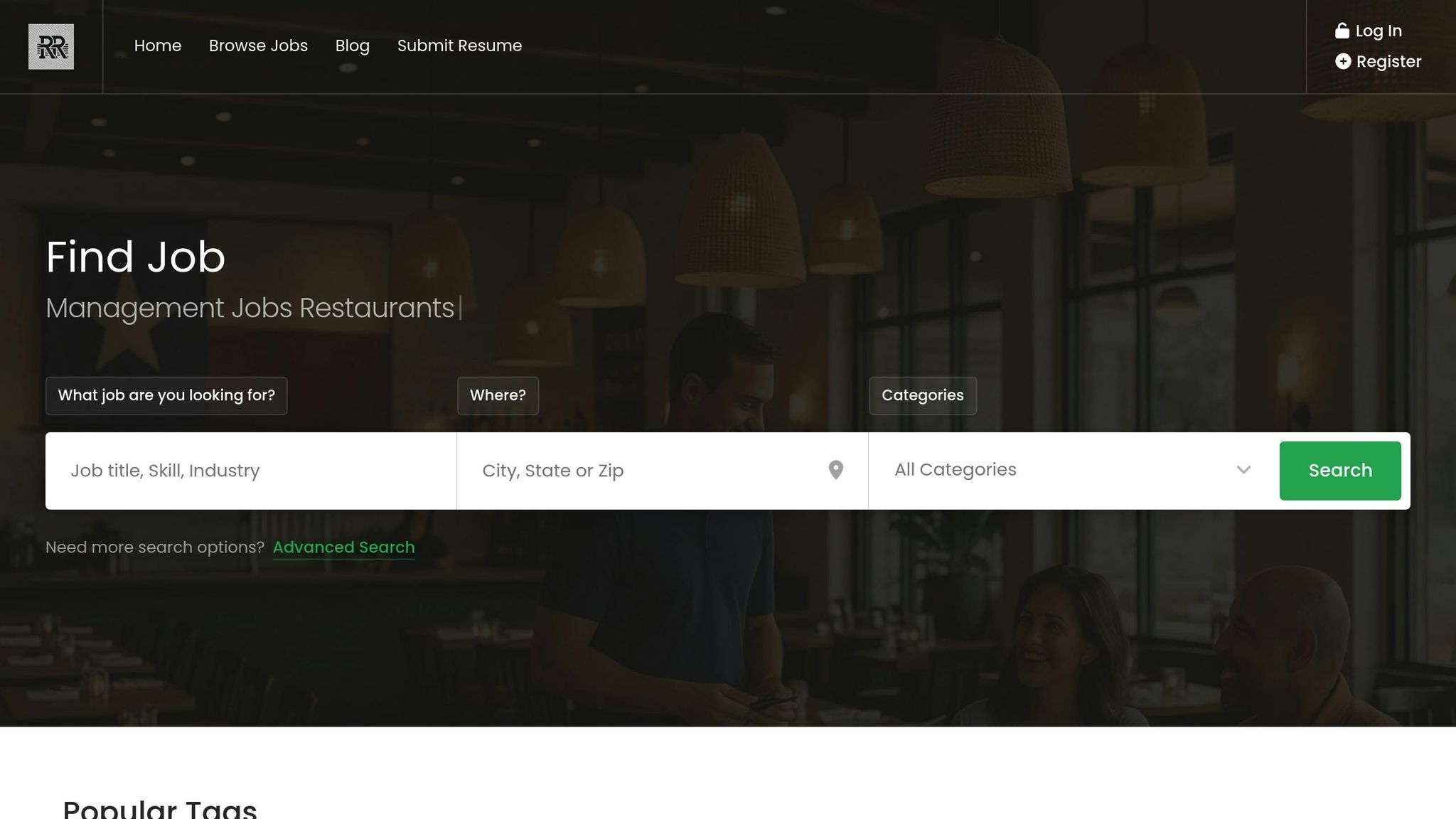
Boost your interview preparation by using tools designed specifically for targeted job searches. Creating a profile on RR Guy opens the door to top restaurant management opportunities across the United States. This platform connects you directly with roles that match your expertise, making it an essential resource for restaurant professionals.
To get started, head over to the RR Guy website and click "Sign Up" to create your account. Since the platform is built for restaurant professionals, it ensures you’re matched with openings that align with your management background, rather than generic job postings. Once your account is ready, take the next step by uploading a resume that highlights your accomplishments.
Upload Your Restaurant Management Resume
After activating your profile, upload a resume that showcases your restaurant management experience. Be specific – include details about your years in leadership roles and the types of establishments where you’ve worked. Highlight measurable achievements, such as reducing costs, improving staff performance, or enhancing operational efficiency.
Focus on your leadership skills and your ability to oversee day-to-day operations, manage budgets, and ensure guest satisfaction. Share examples that demonstrate how you’ve handled high-pressure situations or maintained quality during busy service periods. If you’ve worked in high-volume settings or specialized in certain cuisines, make sure those details stand out.
Configure Targeted Job Alerts
Once your resume is uploaded, use your dashboard to set up job alerts. RR Guy’s alert system is tailored to restaurant management roles, covering fast casual, full-service, fine dining, and hotel operations nationwide. You can customize alerts based on location, salary expectations, and job type.
The platform’s curated approach ensures you receive notifications for relevant opportunities without being swamped by unrelated listings. You can choose to get updates daily or weekly, depending on how actively you’re searching.
Keeping an active RR Guy profile signals to employers that you’re serious about advancing your career in restaurant management. Many restaurant groups rely on this platform to find experienced managers, giving you access to exclusive opportunities.
15. Plan Your Interview Day Logistics
Once your portfolio and responses are ready, it’s time to focus on the practical details for interview day. Thoughtful planning can highlight your organizational skills and professionalism.
Confirm Your Interview Details
Reach out to the restaurant beforehand to double-check the interview time, location, and any specific documents you’ll need to bring.
Plan Your Route and Transportation
Use tools like Google Maps to plot your route, and allow extra time for potential delays.
"Map out your physical route to the interview. Then add padding to your trip time to account for traffic and other unexpected delays." – Culinary Agents
Set Your Arrival Time
Aim to arrive 10–15 minutes early. As a helpful tip:
"Plan to arrive 15 minutes prior to the reservation and wait for your interviewer at the front of the restaurant – especially if you haven’t been in that area before. This will help prevent you from being late while trying to figure out where to park (Google Maps is your best friend)." – The Muse
If it’s a working interview, consider adding an extra 5–10 minutes to adjust your attire if needed.
Prepare Your Interview Materials
Bring a professional folder that includes extra copies of your resume, a notepad for jotting down questions or notes, and any paperwork the restaurant has requested.
Taking the time to plan these details not only ensures a smooth interview day but also demonstrates your ability to manage and execute tasks effectively – key traits for a restaurant manager.
Conclusion
Excelling in restaurant management interviews requires a mix of solid preparation and confident execution. Following the 15 steps in this checklist – from understanding the restaurant’s concept to fine-tuning interview logistics – shows you’re ready to take on a leadership role. Each step reflects your ability to manage the challenges and responsibilities that come with the job.
During the interview, use the STAR method to share clear, detailed examples of your achievements and problem-solving skills. Restaurant owners and hiring managers want to see how your experience aligns with key areas like operations, finances, and team leadership. Whether you’re explaining how you managed costs, developed staff, or handled a crisis, specific examples help bring your qualifications to life and highlight your ability to meet the role’s demands.
Interviews often cover a wide range of topics – stress management, customer service, staffing, cost control, and even technology. Showing you’re prepared to discuss strategies and experiences across these areas demonstrates a well-rounded understanding of what it takes to lead effectively.
Your presentation also matters. An organized portfolio, punctuality, and complete documentation reflect the essential organizational skills required for restaurant management. Alongside these efforts, digital tools like RR Guy can give your job search an extra edge.
Take advantage of RR Guy’s features – set up targeted alerts and browse tailored job listings – to land your next restaurant management position with confidence.
FAQs
How can I effectively demonstrate leadership skills in a restaurant management interview?
To stand out in a restaurant management interview, focus on demonstrating your leadership abilities through real-world examples. Talk about times when you’ve successfully led a team, tackled challenges, or inspired others to meet objectives. A helpful way to structure your answers is by using the STAR method – explain the Situation, describe the Task you faced, outline the Actions you took, and share the Results you achieved. This approach ensures your examples are both clear and memorable.
Emphasize leadership qualities like strong communication, quick decision-making, and flexibility. Share how you’ve created a positive workplace by recognizing achievements, encouraging collaboration, and maintaining open lines of communication. On top of that, highlight practical skills that are essential for the job, such as managing schedules, keeping inventory under control, and training staff. These examples show you’re prepared to handle both the people and operational sides of restaurant management.
What’s the best way to use the STAR method to answer behavioral interview questions for a restaurant management role?
The STAR method is an effective framework for answering behavioral interview questions, especially for showcasing your abilities as a restaurant manager. Here’s how you can use it:
- Situation: Start by setting the stage. Describe a specific challenge or context you encountered in your work.
- Task: Outline your role in that situation. What was your responsibility, and what goal were you aiming to achieve?
- Action: Detail the steps you took to tackle the challenge or fulfill the task. Highlight your individual contributions and decisions.
- Result: Wrap up with the outcome. Share measurable results or key takeaways from your actions.
By keeping your responses clear and centered on examples that demonstrate leadership, problem-solving, and communication, you’ll help interviewers see how you approach challenges and the results you can deliver.
What should I include in my portfolio to stand out in a restaurant management interview?
When preparing for a restaurant management interview, your portfolio can be a powerful tool to leave a lasting impression. It should clearly and professionally present your experience, skills, and accomplishments. Make sure to include essential documents like your résumé, references, and relevant certifications.
Go a step further by showcasing specific projects you’ve spearheaded – examples might include initiatives to streamline operations, manage budgets effectively, or lead a team to achieve notable success. Including visual elements, such as charts or photos, can make your portfolio more engaging and help illustrate your contributions. For instance, you could highlight measurable outcomes like boosting revenue or cutting costs, paired with a short summary of the strategies you used and the lessons you learned.
Finally, tailor your portfolio to align with the restaurant’s specific needs, emphasizing the skills and achievements that demonstrate your ability to meet their goals.

Pingback: How to use Star Method to rock an interview