

Ultimate Guide to QSR Management Careers
- QSR management offers rapid career growth: Start in entry-level roles like crew member and progress to shift leader, assistant manager, store manager, or even district manager within 5–10 years.
- No formal education required: Experience and performance matter more, though degrees in hospitality or certifications like ServSafe can help.
- Job outlook is steady: Food service management roles are projected to grow by 2% from 2023 to 2033.
- Strong earning potential: Salaries range from $35,000 for assistant managers to $90,000 for district managers, depending on experience and location.
- Key skills for success: Leadership, financial management, problem-solving, and customer service are critical.
- Challenges include long hours and high-pressure environments, but the rewards include leadership experience, job stability, and opportunities for advancement.
QSR management is ideal for those who thrive in fast-paced environments and value career progression. Ready to dive in? Keep reading for a detailed breakdown of roles, responsibilities, and tips for success.
The QSR Blueprint: Careers, Culture, and Customer Experience from JZ
Career Paths in QSR Management
The quick-service restaurant (QSR) industry offers a fast-paced career ladder that appeals to driven individuals, taking them from front-line roles to overseeing multiple locations.
Job Roles and Daily Tasks
QSR careers often start with foundational roles and expand into leadership positions as responsibilities grow.
Entry-level positions are where most QSR careers begin. Crew members focus on essential tasks like taking orders, preparing food, keeping the restaurant clean, and ensuring customers have a positive experience. These roles help employees build the skills needed for future leadership opportunities.
Shift leaders step into supervisory roles, managing small teams during specific shifts. They ensure smooth operations, assist with training new employees, and act as a link between front-line staff and management.
Assistant managers take on greater responsibilities, such as creating schedules, overseeing inventory, and managing staff. They also address customer complaints, train employees, and ensure company standards are upheld. In the absence of the store manager, assistant managers often make key decisions.
Store managers and general managers carry full accountability for the performance of their restaurant. Their responsibilities include hiring staff, managing budgets and inventory, ensuring food safety compliance, and executing marketing strategies. They oversee everything from daily operations to profit-and-loss management.
District managers oversee multiple locations within a specific area. They monitor financial performance, ensure operational consistency, and support store managers with challenges. Their role often involves traveling between locations, conducting performance reviews, and collaborating with corporate teams to drive growth.
Real-life examples highlight these career paths. Mani Bhushan started as a Taco Bell crew member and rose through the ranks to become National VP of Operations. Similarly, Kelly McCutcheon began as a server and progressed to Group Director of Training & Development at Whataburger, moving through roles like trainer and VP of Training along the way.
As roles expand, so do the expectations – and the rewards.
Pay Ranges and Advancement Opportunities
Compensation in QSR management reflects the increasing responsibilities at each level. Crew members typically earn $12 to $15 per hour, depending on location and experience.
Assistant managers earn annual salaries between $35,000 and $45,000, while store managers can expect $45,000 to $65,000 per year. Moving up to district manager brings salaries ranging from $65,000 to $90,000 annually.
Location plays a significant role in pay differences. For example, general managers in Cleveland can earn $80,000–$90,000, while their counterparts in Los Angeles may earn $65,000–$70,000.
QSR careers also offer quicker advancement compared to many other industries. For instance, it takes an average of 2.5 years to gain the experience needed for a kitchen manager role. Many employees can progress from entry-level to district manager roles within 5 to 10 years.
Structured training programs help accelerate this growth. Whataburger’s "TM to GM" (Team Member to General Manager) program is a prime example, offering employees a clear path to leadership while helping managers identify high-potential team members.
Beyond district management, career opportunities expand into areas like regional leadership, corporate operations, marketing, human resources, and supply chain management. Some experienced managers even transition into franchise ownership or start their own restaurant ventures, leveraging the business expertise gained during their QSR careers.
According to the National Restaurant Association, "The opportunities for advancement in the restaurant industry are unlike any other. Experience and performance can propel the right individual from an entry-level position to the top echelons of management."
Key traits that drive promotions include a strong work ethic, dependability, excellent customer service skills, and leadership ability. Employees who take on additional responsibilities, mentor their peers, and contribute to their team’s success are often fast-tracked for higher roles.
Skills and Requirements for QSR Managers
QSR managers juggle multiple responsibilities, requiring a mix of leadership, technical expertise, and business know-how to maintain efficient operations in a fast-paced environment.
Important Skills for Success
To thrive in QSR management, mastering key skills is non-negotiable. Managers must lead with clarity and confidence, motivating their teams and addressing customer concerns – especially during busy times. This hands-on leadership fosters a positive work environment that drives both morale and performance.
Financial savvy is another must. Managers need to be adept at budgeting, minimizing labor costs through smart scheduling, managing inventory, and implementing strategies to boost sales. These skills directly impact the restaurant’s bottom line.
Quick thinking and time management are critical when dealing with challenges like supply shortages, staffing gaps, or equipment failures. Balancing administrative tasks with active, on-the-floor leadership ensures seamless operations, even during high-pressure periods.
Customer service is at the heart of QSR success. Managers must handle feedback with professionalism and ensure that speed, efficiency, and quality deliver a dining experience that keeps guests coming back.
Education vs. Experience
While hands-on experience often takes precedence in the QSR industry, formal education can complement practical skills. Many successful managers start in entry-level roles – such as crew members or cooks – and work their way up. According to the National Restaurant Association’s Education Foundation, kitchen managers typically have about 2.5 years of experience before stepping into their roles.
However, degrees in Hospitality Management or Food Business Management can give candidates an edge. These programs offer advanced training in areas like accounting, human resources, supply chain management, and marketing. Combining on-the-job experience with formal education creates a well-rounded skill set for managing both daily operations and long-term growth.
A balanced approach is key. Managers with back-of-house experience should explore guest-facing roles to refine their customer service skills, while those with front-of-house expertise can benefit from learning food preparation and safety protocols. This cross-training builds a deeper understanding of all aspects of restaurant operations, leading to better decision-making.
Training and Development Programs
Certifications, such as food safety and management credentials, are valuable additions to a manager’s toolkit. Beyond these, workshops and online courses offer opportunities to sharpen skills and prepare for leadership roles.
Mentorship programs and industry partnerships provide access to seasoned professionals and best practices, while internships at leading restaurants offer hands-on experience to reinforce formal training.
Organizational skills are also crucial. Standardizing processes across food preparation, customer service, staff training, inventory management, and safety compliance ensures consistency and minimizes errors. Tracking metrics like schedules, productivity, and hours worked helps managers maintain operational excellence. With these competencies and a commitment to continuous learning, QSR managers can build rewarding, long-term careers.
sbb-itb-306cd44
Challenges and Benefits of QSR Management Careers
Managing a Quick Service Restaurant (QSR) comes with its own set of hurdles and rewards. Understanding both aspects can help those considering this career path make better decisions about their future.
Common Challenges in QSR Management
Working in QSR management often means putting in long hours, typically exceeding 50 per week. These hours often include evenings, weekends, and holidays, which can make maintaining a work-life balance difficult.
The environment is inherently high-pressure, with managers needing to meet tight deadlines while ensuring quality standards. Peak rush periods can be especially intense, requiring quick decision-making to keep operations running smoothly. Over time, this constant pressure can lead to stress and burnout.
On top of the mental demands, there are also physical challenges. Managers spend long hours on their feet, move quickly to address issues, and occasionally handle heavy lifting. This combination of physical and mental strain requires stamina and resilience.
Staffing issues are another persistent challenge. High turnover rates mean managers are frequently recruiting, hiring, and training new employees. Balancing these responsibilities while maintaining service standards – and addressing customer complaints during busy times – adds another layer of complexity to the job.
Despite these challenges, a career in QSR management also comes with notable rewards.
Benefits of QSR Management
One of the biggest perks is fast career advancement. The QSR industry values performance and hard work over formal credentials, allowing motivated individuals to rise through the ranks quickly.
Managers also gain valuable leadership experience through hands-on work. From supervising teams to resolving conflicts and making operational decisions, these daily responsibilities help build skills that are useful across various industries and roles.
Another benefit is the ability to see a direct impact on business results. Managers can immediately observe how their decisions influence sales, customer satisfaction, and overall efficiency. This direct feedback loop can be incredibly motivating.
The industry also offers job stability. With a constant demand for QSR services, management opportunities are plentiful. Salaries for restaurant and food service managers typically range between $43,648 and $65,920 per year.
Additionally, major QSR brands invest in their employees’ growth. Companies like McDonald’s and KFC provide structured programs such as "Archways to Opportunity" and "Coach Academy", which help employees develop new skills and advance their careers.
Pros and Cons Overview
Here’s a quick look at the main advantages and challenges of a QSR management career:
| Pros | Cons |
|---|---|
| Rapid career growth opportunities | Long and irregular work hours |
| Development of leadership and business skills | High-pressure, stressful environment |
| Immediate impact on business outcomes | Physically demanding work |
| Strong job stability and availability | Frequent staff turnover and recruitment needs |
| Mentorship and skill-building programs | Work-life balance struggles |
| Transferable skills for other industries | Weekend and holiday work commitments |
| Potential to own a franchise | Handling customer and operational complaints |
Choosing a career in QSR management depends on your personal goals and preferences. If you thrive in fast-paced environments and value opportunities for growth, this path can be incredibly rewarding. On the other hand, if you prefer predictable hours and a low-stress workplace, the challenges might outweigh the benefits.
Success in this field often comes down to building strong time management and coping skills. Many successful managers embrace these challenges, viewing them as opportunities to grow both personally and professionally. Over time, this resilience can become one of their greatest assets.
How to Find and Grow Your QSR Management Career
Navigating a career in QSR (Quick Service Restaurant) management can be both exciting and rewarding. Whether you’re aiming for your first management role or looking to climb the ladder, having a clear strategy is key. The restaurant industry moves quickly, and standing out requires both preparation and persistence. Here’s how you can set yourself up for success and grow within this dynamic field.
Job Search Tips for QSR Management
When crafting your resume, focus on measurable accomplishments. Instead of vague statements like "boosted sales", go for specifics, such as: "Increased monthly sales by 15% through improved customer service and staff training." Employers appreciate concrete results. Don’t forget to highlight certifications like ServSafe or management training programs. These show you’re serious about your career and prepared to handle the demands of the industry.
Tailor your resume for each job application by using keywords from the job description. Many companies use applicant tracking systems to filter candidates, so aligning your resume with their language can improve your chances of getting noticed. Be sure to emphasize skills in restaurant operations, leadership, and customer service – these are often at the top of employers’ wish lists.
Prepare thoroughly for interviews by practicing responses to common questions about staffing, motivating teams, and handling busy periods. Also, research the company’s values, menu, and business model. This not only shows your interest but also helps you align your answers with their goals.
For specialized roles, consider using platforms dedicated to restaurant management jobs.
Using RR Guy for QSR Management Jobs
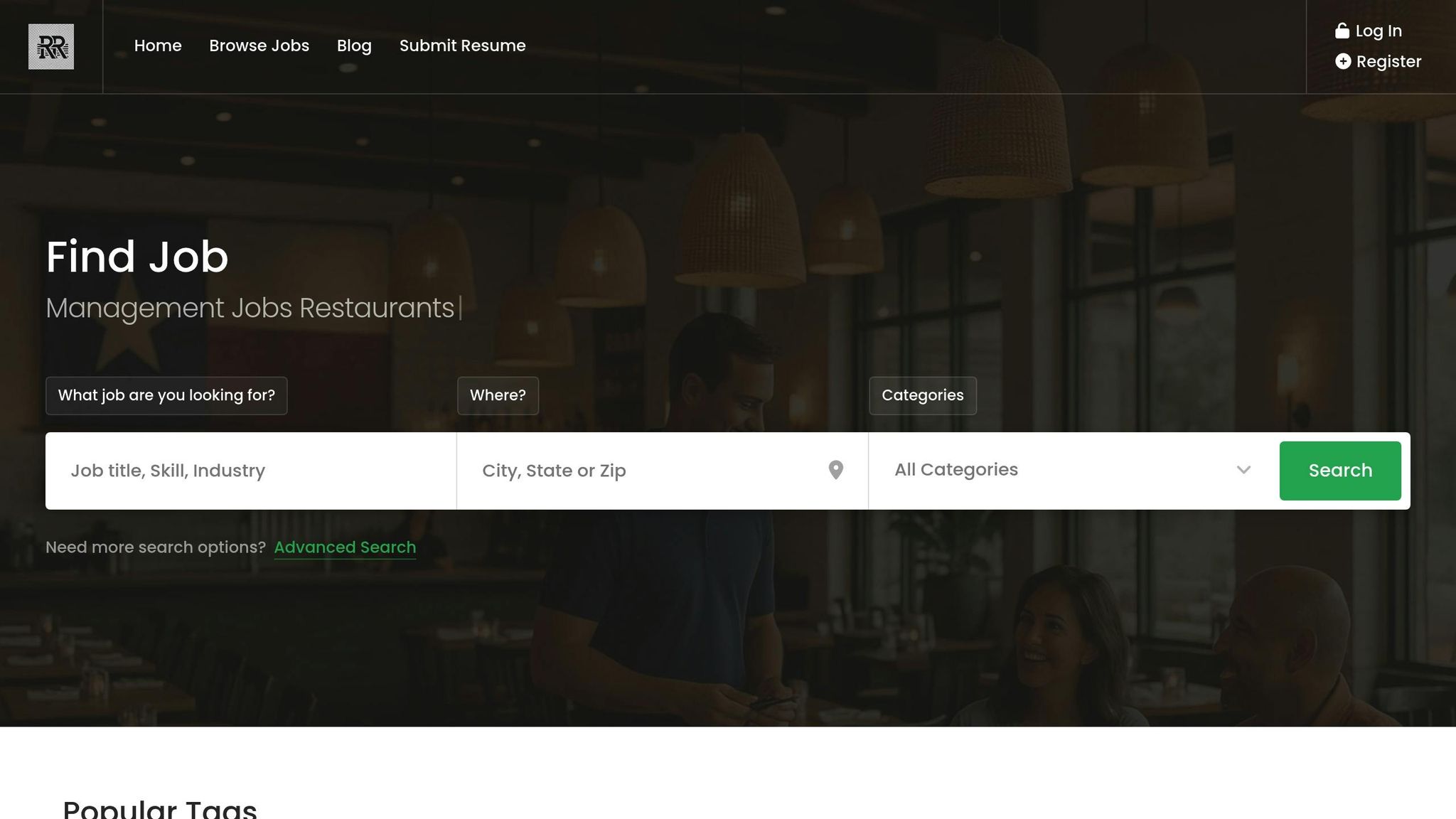
RR Guy is a job platform tailored specifically for restaurant management positions, making it a great resource for QSR professionals. Unlike general job boards, it focuses exclusively on restaurant roles, saving you time by eliminating irrelevant listings. At the moment, the platform boasts 145 job openings across various restaurant categories, with plenty of opportunities in QSR management.
Uploading your resume is free, and recruiters on the platform can review your submission to help you optimize it. This ensures you’re putting your best foot forward with potential employers.
You can also set up job alerts to stay updated on new openings, allowing you to act quickly when opportunities arise. Additionally, RR Guy’s blog offers helpful resources, including tips on resume building, salary expectations, and career advancement – all tailored to restaurant professionals.
The platform has proven effective for many users. For example, in November 2025, Ivan B., a Grocery Manager, landed a new role with the help of recruiter Dave, who provided professional and timely support throughout the process. Similarly, Scott A., an Assistant General Manager in fast casual dining, praised Dave for his "clear communication, timely follow-up, and ability to create a connection".
Building Networks and Learning New Skills
Networking is a game-changer in the QSR industry. Many promotions and opportunities come through referrals and connections. Attend local hospitality events, join groups like the National Restaurant Association, and stay active on LinkedIn. Share your experiences, engage with industry posts, and interact with QSR brands. This kind of visibility can open doors you might not expect.
Mentorship is another powerful tool. Seek guidance from experienced professionals within your company or through industry connections. Many successful QSR managers credit their mentors for helping them navigate challenges and seize opportunities.
Continuous learning is critical in the fast-paced QSR world. Stay updated by subscribing to industry newsletters, attending webinars, and participating in training programs. Many companies offer structured development programs – take advantage of these to build your skills and show your commitment to growth.
Cross-training is another excellent way to expand your expertise. Learning about kitchen operations, front-of-house service, and back-office tasks gives you a well-rounded understanding of restaurant management. This knowledge becomes especially valuable if you aim to move into multi-unit or district management roles.
Keep an eye on industry trends and new technologies. From advanced ordering systems to delivery platforms, the QSR landscape is constantly evolving. Managers who adapt quickly to these changes often find themselves in high demand.
Lastly, consider the entrepreneurial route. Many QSR professionals transition from management to ownership. For example, Mani Bhushan started as a crew member at Taco Bell and worked his way up to National VP of Operations by developing innovative training programs and showcasing strong leadership. Your management experience equips you with the operational know-how to potentially run your own business in the future.
Key Points for Future QSR Managers
Getting into QSR management offers a fast track to leadership. This industry is known for its quick career progression, allowing employees to climb from entry-level roles to management positions in just a few years. The pace of advancement here often outpaces other fields, making it ideal for individuals ready to step up and thrive in a dynamic environment.
In QSR careers, practical experience is king. Hands-on expertise is the backbone of success, creating opportunities for people from all walks of life to build rewarding careers based on their skills and performance.
To excel in the fast-paced world of QSR, a growth mindset is crucial. Leaders in the industry stress the importance of staying curious, open to learning, and adaptable to change. This mindset keeps you sharp and ready to tackle new challenges.
Strong leadership and team-building skills are non-negotiable for QSR managers. The best managers know how to inspire diverse teams, stay calm under pressure, and deliver excellent customer experiences – even during the busiest hours. These skills not only drive success in-store but can also open doors to broader roles within the industry.
The career paths in QSR go far beyond managing a store. Opportunities in areas like marketing, human resources, supply chain, and corporate leadership provide plenty of room for growth and exploration.
Networking and mentorship can also play a huge role in advancing your career. Building professional relationships early on can unlock opportunities that might not be advertised publicly, giving you a competitive edge.
The job outlook for food service managers in the U.S. remains steady. With the industry continuing to expand, there’s a consistent need for skilled professionals to step into management roles.
If you’re aiming for promotions, focus on delivering measurable results. Metrics like customer satisfaction, revenue growth, and employee retention are often used to evaluate success and can set you apart when advancement opportunities arise.
As the QSR industry evolves – with new technologies, ordering systems, and changing customer preferences – continuous learning is essential. Managers who adapt quickly to these shifts remain in high demand and well-positioned for growth.
Starting your journey in QSR management means beginning in an entry-level role, seeking out leadership opportunities, and showing initiative at every step. The industry rewards those who embrace challenges, prioritize customer satisfaction, and commit to both personal and professional growth. Every challenge you tackle, every result you deliver, and every new skill you master will move your career forward.
FAQs
What is the difference between a store manager and a district manager in quick service restaurant (QSR) management?
The key distinction between a store manager and a district manager in the world of QSR management lies in the scale of their responsibilities.
A store manager focuses on running the day-to-day operations of a single restaurant. This includes tasks like creating staff schedules, managing inventory, ensuring excellent customer service, and working to hit sales targets.
On the other hand, a district manager oversees multiple restaurants within a specific region. Their job is more strategic – they monitor how stores are performing, ensure company standards are met, manage budgets, and provide guidance to store managers to help them reach their goals. In essence, while the store manager is hands-on with daily operations, the district manager takes a broader view, ensuring consistency and success across multiple locations.
Can I succeed in a QSR management career without a hospitality degree or formal education?
Many successful quick service restaurant (QSR) managers have climbed the career ladder through hands-on experience and a strong work ethic rather than relying on formal education. Starting in entry-level positions – like team member or shift supervisor – gives you the chance to master the day-to-day operations of a restaurant while building essential leadership and problem-solving skills.
In the QSR industry, employers often prioritize practical experience, strong interpersonal abilities, and a customer-first attitude over academic credentials. By showing up consistently, embracing challenges, and being open to growth opportunities, you can carve a path to management roles. Platforms such as RR Guy can connect you with opportunities that align with your goals in restaurant management.
How can QSR managers effectively manage the high-pressure and physically demanding nature of their role?
Quick-service restaurant (QSR) managers often face high-pressure situations, but they can excel by honing their time management skills, delegating tasks wisely, and keeping communication lines open with their team. Breaking larger responsibilities into smaller, actionable steps and prioritizing tasks can go a long way in reducing stress while boosting efficiency.
To meet the physical demands of the role, it’s important for managers to take regular breaks, stay hydrated, and maintain healthy habits outside of work. Creating a supportive team environment and promoting collaboration can help share the workload more evenly, making the workplace more balanced and productive.