

How to Ace Your Restaurant Management Interview
Securing a restaurant management role requires more than experience – it demands preparation and the ability to showcase your leadership, customer service, and financial skills. To stand out, focus on these key steps:
- Research the restaurant: Understand their brand, menu, challenges, and competitors.
- Highlight achievements: Use measurable results (e.g., cutting costs, increasing revenue) to demonstrate your value.
- Practice common questions: Prepare for scenarios like handling staff conflicts, managing budgets, and resolving customer complaints.
- Show leadership: Share examples of motivating teams, improving morale, and driving results during high-pressure situations.
Employers value managers who can balance revenue growth, team management, and customer satisfaction. Use platforms like RR Guy to find tailored opportunities and refine your interview strategy. Preparation and clear communication are the keys to success.
RESTAURANT MANAGER Interview Questions And Answers (Become A Restaurant Manager)
What Restaurant Managers Do
To excel in a restaurant management role, you need a clear understanding of the responsibilities that come with the position. From overseeing staff to managing finances and ensuring customer satisfaction, restaurant managers juggle a wide range of tasks. Below, we break down the core duties and skills that are essential for success in this demanding role.
Main Duties of a Restaurant Manager
Restaurant managers are the backbone of daily operations, ensuring that everything runs smoothly both in the front-of-house and back-of-house. They coordinate the efforts of servers, hosts, bartenders, cooks, and dishwashers, creating a unified team that delivers a seamless dining experience.
One of the key responsibilities is staff management. This includes hiring, training, and scheduling team members, as well as conducting performance reviews and addressing any concerns or conflicts. Managers also hold team meetings to maintain open communication and ensure everyone is aligned.
Another critical area is financial oversight. Managers monitor daily sales, control food and beverage costs, and keep track of inventory to stay within budget. This involves reviewing profit and loss statements, negotiating with suppliers, minimizing waste, and finding ways to cut costs without sacrificing quality.
Customer satisfaction is a top priority. Managers handle complaints, ensure service standards are met, and resolve issues promptly to maintain a positive dining experience.
Ensuring compliance and safety is also a major part of the job. Managers must stay up-to-date on local health codes, conduct regular inspections, and train staff on food safety practices. They are responsible for maintaining workplace safety and adhering to all health department regulations.
Skills You Need to Succeed
To tackle these responsibilities effectively, restaurant managers need a well-rounded skill set.
Leadership is at the core of the role. A successful manager knows how to inspire and motivate a diverse team, delegate tasks efficiently, and cultivate a supportive work environment. Keeping morale high during busy periods and addressing challenges head-on are key aspects of strong leadership.
Problem-solving skills are indispensable. Restaurants are fast-paced environments where unexpected issues arise, from equipment failures to last-minute staff absences. A manager must stay calm under pressure and quickly find solutions that keep operations on track.
Financial know-how is another must. Understanding profit margins, labor costs, and inventory management is essential for making informed decisions that impact the restaurant’s bottom line. Managers need to be comfortable analyzing financial reports and implementing data-driven strategies.
Communication skills are vital for interacting with staff, customers, suppliers, and upper management. Whether it’s giving clear instructions, offering constructive feedback, or handling sensitive conversations, effective communication ensures smooth operations.
Finally, time management and adaptability are crucial. Balancing administrative work with the immediate needs of the restaurant requires careful planning and the ability to pivot when priorities shift.
What Employers Expect
Employers look for managers who can increase revenue while keeping operations efficient. This means understanding strategies like upselling, refining the menu, and running promotions to boost sales, all while controlling costs.
Creating a positive work culture is another key expectation. With high turnover rates in the industry, employers value managers who can build strong, loyal teams. Recognizing hard work, offering opportunities for growth, and fostering a supportive environment go a long way in retaining staff.
Maintaining high-quality standards is non-negotiable. Managers are expected to ensure that food, service, and cleanliness consistently meet or exceed customer expectations.
In today’s data-driven world, employers also prioritize analytical thinking. Managers must analyze sales reports, customer feedback, and other metrics to identify trends and make informed decisions that improve operations.
Lastly, brand representation is critical, especially for chain restaurants or well-known establishments. Managers are expected to embody the restaurant’s values and ensure that every team member delivers experiences that align with the brand’s image.
Employers also value crisis management skills. Whether it’s handling a staffing shortage, a sudden equipment failure, or an unhappy customer, they need managers who can remain calm and resolve issues effectively while keeping the team motivated.
Understanding these expectations not only helps you prepare for interviews but also positions you as a strong candidate for the role.
How to Prepare for Your Restaurant Management Interview
Preparation is the key to standing out in a restaurant management interview. It not only boosts your confidence but also helps you highlight the leadership and problem-solving skills that are essential for the role. The more you know about the restaurant and the better you can articulate your past achievements, the stronger your performance will be.
Research the Restaurant and Tailor Your Strategy
Begin by digging into the restaurant’s brand identity and values. Take a close look at their website, mission statement, and what sets them apart. Familiarize yourself with their menu, customer base, and market positioning. For chain restaurants like Olive Garden or Chipotle, learn about their corporate culture and recent developments. If it’s an independent establishment, explore their social media presence and read reviews on platforms like Yelp or Google.
To get a deeper understanding, visit the restaurant as a customer. Pay attention to how the staff operates, the flow of service, and the overall atmosphere. Notice details like peak hours, table turnover rates, and how they handle busy periods. This hands-on experience not only gives you valuable insights but also shows your genuine interest in the role during the interview.
Don’t stop there. Research the local competition to understand where the restaurant fits in the market. Know their price range compared to nearby spots and identify potential challenges they may face. If they’re expanding or introducing new menu items, bring this up to demonstrate you’ve done your homework.
If possible, find out about the hiring manager or owner through LinkedIn. Understanding their background can help you tailor your responses to align with their management style and priorities.
Highlight and Organize Your Achievements
Use the Context-Action-Result (CAR) framework to structure your accomplishments. This approach allows you to clearly showcase your problem-solving skills and the measurable impact you’ve made in previous roles.
Whenever possible, quantify your achievements. For example, instead of saying you “improved customer service,” be specific: “I increased customer satisfaction scores by 20% in three months by introducing a new training program for staff.” Whether it’s cutting food costs, boosting revenue, or improving team retention, have the numbers ready to back up your claims.
Focus on accomplishments that demonstrate key restaurant management skills, such as cost control, team leadership, crisis management, and maintaining high standards during busy times. Be prepared to share examples of how you’ve successfully handled challenges like resolving staff conflicts, managing high-pressure situations, or driving revenue growth.
Tailor your examples to align with the restaurant’s style and priorities. For instance, if you’re interviewing at a family-friendly spot, emphasize your ability to create a welcoming environment for all ages. For a fine dining establishment, highlight your expertise in delivering top-tier service and your knowledge of wine pairings.
Prepare 5–7 concise stories that illustrate different aspects of your management experience. Practice delivering them naturally so you can share them confidently without sounding overly rehearsed.
Practice Common Interview Questions
Once you’ve organized your examples, focus on refining your responses to common interview questions. Use the STAR method (Situation, Task, Action, Result) to structure your answers for behavioral questions. This method ensures your responses are clear, focused, and outcome-driven. Keep your answers between 1–2 minutes to maintain the interviewer’s attention.
Anticipate scenario-based questions that test your ability to think on your feet. Be ready to explain how you’d handle challenges like a kitchen fire during a dinner rush, a customer complaint about food quality, or a staff shortage on a busy night. Highlight your ability to stay calm, make quick decisions, and implement effective solutions.
Be prepared to discuss your management philosophy and how you motivate diverse teams. Share your approach to scheduling, conducting performance reviews, and addressing disciplinary issues. Think about specific strategies you use to keep morale high during stressful periods.
Finally, prepare thoughtful questions for the interviewer. Ask about their operational challenges, growth plans, and what success looks like in the first 90 days. These questions show that you’re thinking strategically about the role and are eager to contribute to the restaurant’s success.
How to Answer Common Restaurant Management Interview Questions
Get ready to tackle questions about leadership, operations, and customer service by using the STAR technique. Restaurant management interviews often center on three key areas: leading teams, overseeing operations and budgets, and managing customer service challenges. The STAR method helps you structure your answers, showcasing the problem-solving steps you took and the results you achieved.
Leadership and Team Management Questions
"Tell me about a time you had to manage a difficult employee."
This question is designed to explore how you handle personnel challenges. Focus on the specific actions you took to address the issue, such as having direct conversations, setting clear expectations, and documenting the process. Walk the interviewer through how you approached the situation and the corrective steps you implemented.
Highlight your communication skills and follow-through. Discuss how you provided feedback, offered additional training if necessary, and set up regular check-ins to monitor progress. If the situation required disciplinary action, explain how you adhered to company policies while maintaining professionalism and respect.
"How do you motivate staff during busy periods or stressful situations?"
This is your chance to showcase your leadership style. Share examples of how you keep morale high during busy shifts, such as rotating staff between stations to prevent burnout, offering incentives for excellent performance, or simply being present on the floor to support your team.
Emphasize your ability to adapt to individual motivators. Some employees thrive on public recognition, while others appreciate private feedback or opportunities for growth. Explain how you’ve tailored your approach to meet the unique needs and goals of your team members.
"Describe your approach to training new employees."
Discuss how you ensure new hires are set up for success. Share your process, which might include pairing them with experienced staff for mentoring, setting clear milestones for their first weeks, and providing consistent feedback to help them improve and feel confident in their role.
Operations and Budget Questions
Once you’ve addressed team management, shift the focus to operational and financial responsibilities.
"How do you control food costs while maintaining quality?"
This question highlights your financial and operational expertise. Talk about strategies like portion control, menu planning, inventory rotation, and negotiating with suppliers. Provide examples of how you’ve successfully reduced waste or improved profit margins while keeping customers happy.
Discuss your monitoring and review systems. Explain how you track key metrics, such as food cost percentages and inventory turnover, and how you use that data to implement cost-saving measures. Be prepared to share specific results, like percentage reductions in food waste or increased profitability over a certain period.
"What would you do if we were short-staffed during a dinner rush?"
Show how you’d approach this high-pressure scenario. Explain how you’d prioritize essential roles, reassign tasks, and rely on cross-trained staff to keep the operation running smoothly. Share how you’d maintain service quality despite the challenges, and demonstrate your ability to make quick, sound decisions.
"How do you ensure food safety and health code compliance?"
Detail your approach to maintaining high standards, including regular temperature checks, cleaning schedules, and staff training. Mention how you document these processes to stay prepared for inspections. If you’ve achieved strong health inspection scores or improved compliance, share those achievements.
Customer Service and Conflict Questions
Finally, prepare to address how you handle customer service issues and team conflicts.
"Tell me about a time you handled an angry customer."
This question evaluates your ability to de-escalate situations and resolve issues effectively. Use the STAR method to explain how you listened to the customer, empathized with their concerns, and took action to resolve the problem. Highlight your focus on ensuring customer satisfaction and preventing similar issues in the future.
"How would you handle a conflict between two team members?"
Conflict resolution is a vital skill for restaurant managers. Describe how you’d approach the situation by first speaking with each person individually to understand their perspectives. Then, explain how you’d mediate a conversation between them, if appropriate, to find a resolution.
Clarify when you’d escalate the issue. Talk about documenting the conflict, setting clear expectations for behavior moving forward, and monitoring the relationship to ensure the issue doesn’t resurface or affect team dynamics.
"What would you do if a customer complained about food quality?"
Walk through your immediate response: apologizing sincerely, removing the item from their bill, offering a replacement, and addressing the issue with the kitchen to prevent it from happening again. Focus on how you balance customer satisfaction with internal problem-solving.
Keep in mind that interviewers aren’t just looking for perfect answers – they want to see how you think on your feet and approach challenges. Show your ability to adapt, collaborate, and make thoughtful decisions when things don’t go as planned. Don’t hesitate to mention when you’d seek input from your team or supervisors for more complex situations.
sbb-itb-306cd44
How to Show Your Leadership and Problem-Solving Skills
This section builds on operational and financial examples by emphasizing how to effectively showcase your leadership achievements and problem-solving abilities. To stand out, focus on providing specific, measurable outcomes that demonstrate your impact. Restaurant managers who back their claims with tangible results and real-world examples make a stronger impression than those who stick to vague statements.
Talking About Your Leadership Wins
When highlighting your leadership successes, focus on examples that drove measurable improvements. Share stories about leading your team through significant transitions, like rolling out a new point-of-sale system, adapting to changing health protocols, or opening a new location. Explain how you handled communication, addressed team concerns, and kept morale high during these shifts.
Mentoring success is another excellent way to showcase leadership. Detail how you helped specific employees grow – describe their starting roles, the skills you helped them develop, and their eventual progression within the organization. Include specifics about your training methods and how you tracked their progress to add depth to your narrative. Additionally, improvements in team morale, such as reduced turnover rates, higher customer satisfaction, or better team performance, can further demonstrate your leadership capabilities.
Showing How You Solve Problems
Your problem-solving examples should highlight your ability to stay calm, think critically, and act quickly under pressure. For instance, you could describe how you managed a broken freezer during a busy service or handled a point-of-sale system crash during a rush. Walk through your immediate actions, backup plans, and how you minimized the disruption to customer service.
Other operational challenges, such as inventory shortages or customer service crises, also provide strong examples. Share how you found creative solutions to ingredient shortages, adjusted menu offerings, or balanced customer satisfaction with team morale – all while safeguarding the restaurant’s reputation.
Sharing Your Financial Results
When discussing financial contributions, focus on measurable outcomes. For example, explain how you implemented portion control measures that saved money each month or renegotiated supplier contracts to lower food costs.
Labor cost optimization is another area to showcase financial leadership. Share how you reduced overtime expenses through smarter scheduling, cross-trained staff to improve efficiency, or introduced productivity incentives that boosted sales performance.
Additionally, highlight revenue growth achievements. Talk about promotional campaigns you developed, menu changes you proposed, or service enhancements you initiated that led to increased revenue. Be specific – mention improvements in customer spending or sales over a defined period.
Whether it’s mentoring employees, streamlining operations, or cutting costs, your results speak volumes. Examples like renegotiating vendor contracts or improving operational efficiency show financial leadership by demonstrating how you researched alternatives, secured better terms, or reduced waste to lower overall expenses.
Using RR Guy to Improve Your Job Search and Interview Prep
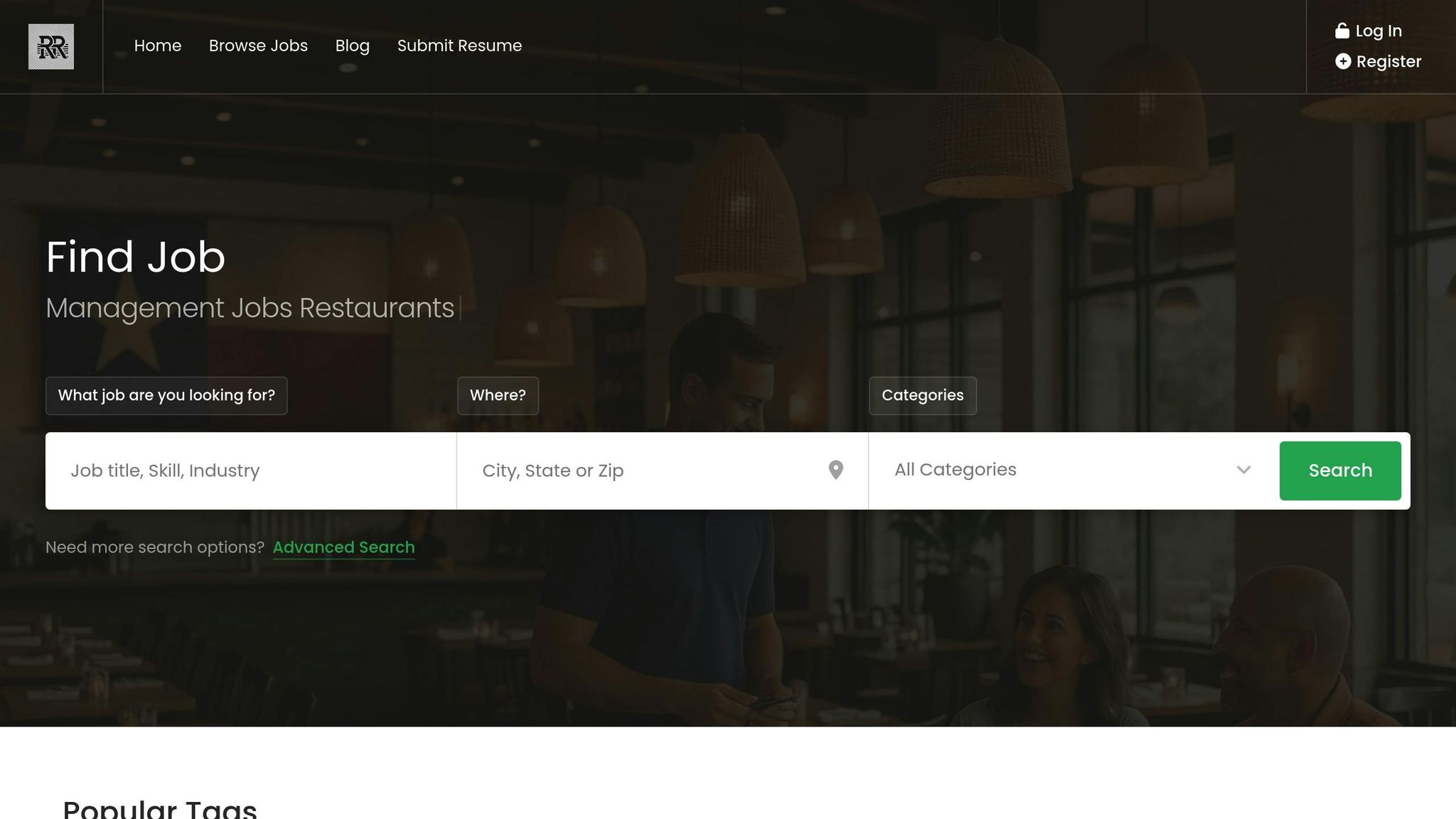
Once you’ve polished your interview skills, the next step is finding the right opportunities to showcase them. That’s where RR Guy comes in. This platform is specifically designed for restaurant management professionals, connecting experienced candidates with top-tier opportunities across the United States.
"Welcome to RR Guy. I’m Dave Gates, a former restaurant exec turned recruiter, and I built this site to support restaurant management professionals." – Dave Gates, Founder of RR Guy
Unlike generic job boards that lump restaurant managers into one broad category, RR Guy focuses on roles ranging from seasoned General Managers to up-and-coming Assistant Managers, offering a tailored experience for industry professionals.
Finding Restaurant Management Jobs with RR Guy
RR Guy’s job board is a treasure trove of listings from well-known restaurant brands. It spans various dining sectors, including fast casual, full-service, fine dining, and even hotel operations. This diversity ensures you can find roles that align with your background and career aspirations.
The platform allows you to browse jobs directly or submit your resume to be matched with openings that suit your expertise. With filters for location and restaurant type, you can zero in on the roles that matter most to you. Beyond job postings, RR Guy also offers resources to help you ace your interviews, making it a one-stop shop for your job search.
Getting Interview Help from RR Guy Resources
RR Guy doesn’t just help you find jobs – it also helps you land them. Its blog is packed with career advice and insights tailored to the U.S. restaurant industry. These resources complement the interview strategies we’ve already discussed, offering tips on how to answer common questions and what qualities employers are looking for in candidates.
Managing Your Job Search with Job Alerts
Keeping up with new opportunities is key to a successful job search, and RR Guy makes it easy with job alerts. These notifications keep you informed about openings that match your preferences, saving you time and effort. Best of all, the platform is completely free for candidates, reflecting its mission to support restaurant professionals without adding financial stress.
Setting up your profile and job alerts is quick and straightforward. This efficient system lets you focus on preparing for interviews with employers who value your skills, rather than wasting time on irrelevant listings. By combining these tools with your honed interview techniques, you’ll be well-positioned to land your ideal restaurant management job.
Key Points for Acing Your Restaurant Management Interview
To stand out in your restaurant management interview, focus on a few key strategies that can make all the difference.
Start with thorough preparation. Research the restaurant you’re applying to – what kind of cuisine do they serve? Who is their target audience? Knowing these details helps you tailor your answers to align with their brand and goals. Also, study the job description carefully. Pick out key phrases or skills they emphasize and find ways to naturally incorporate those into your responses. This step ensures your achievements directly match the role’s requirements.
Highlight your past results. Employers want to see proof of your abilities, so be ready to discuss specific accomplishments from previous roles. Practice answering common interview questions about leadership, team management, operations, budgeting, and customer service. Show how you prioritize both customer satisfaction and employee well-being.
Pay attention to your presentation. First impressions matter. Dress professionally, maintain confident body language, and actively listen during the interview. Also, come prepared with thoughtful questions about the restaurant, their team culture, and their onboarding process. This shows genuine interest and engagement.
Stay informed about industry trends. Demonstrating your knowledge of current restaurant management practices shows you’re committed to the field. Be ready to discuss areas where the restaurant could improve, but balance any critique with positive suggestions and insights. This approach highlights your ability to think strategically.
Lastly, use specialized resources to give yourself an edge. Platforms like RR Guy focus specifically on restaurant management roles across casual dining, fast casual, and fine dining. These tools can connect you with opportunities that align with your expertise and career goals. Combining these resources with strong preparation ensures you’re in a great position to land the job you want.
FAQs
How can I effectively showcase my leadership skills in a restaurant management interview?
To showcase your leadership skills in a restaurant management interview, focus on sharing specific examples from your past experiences. Talk about how you’ve motivated your team by recognizing individual strengths, creating a positive atmosphere, and rewarding outstanding performance. Highlight moments where you successfully resolved conflicts by practicing active listening and making fair, thoughtful decisions.
You can also discuss your efforts in building strong teams – whether through staff training, encouraging teamwork, or improving individual performance through coaching. Be sure to touch on how you communicate clearly with your team, delegate tasks effectively, and handle underperformance in a constructive way. Tailoring these examples to align with the restaurant’s goals and culture will help you leave a strong impression.
How can I customize my interview answers to reflect a restaurant’s brand and values?
To tailor your interview answers to a restaurant’s brand and values, start by diving into some research. Get a solid understanding of their concept, menu, target customers, and what sets them apart from competitors. This background knowledge will allow you to shape your responses in a way that aligns with their identity.
Show genuine enthusiasm for the opportunity by sharing why their brand resonates with you and how you can add value to their team. Use specific examples from your past experiences to showcase skills like leadership, customer service, or problem-solving – especially those that match their core values. Also, be prepared to explain how you can adapt to shifts in the market or respond to customer feedback to help the restaurant achieve its long-term goals.
What are some challenges restaurant managers face, and how can I prepare to discuss them in an interview?
Restaurant managers face a variety of challenges, from resolving conflicts among team members or customers to navigating high-pressure moments during peak hours. On top of that, they need to keep operations running smoothly – managing everything from inventory to scheduling. When preparing for interview questions about these scenarios, it’s a good idea to use the STAR method (Situation, Task, Action, Result) to provide clear, structured examples from your experience.
Make sure to emphasize key skills like leadership, problem-solving, and customer service. Be prepared to discuss how you’ve handled complaints, managed competing priorities, and fostered a positive work environment. Demonstrating your knowledge of health and safety standards and your focus on operational efficiency can leave a lasting impression as well.